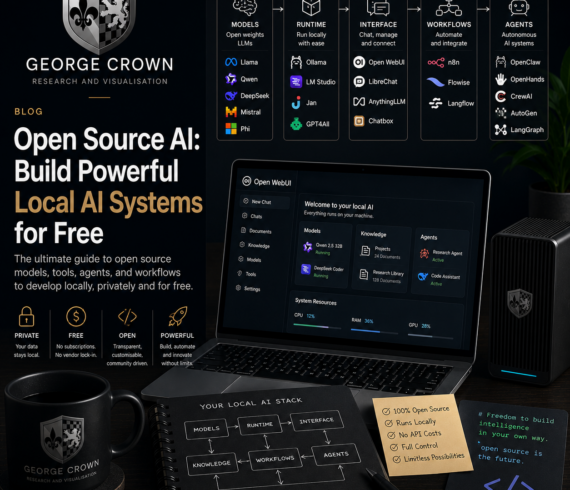
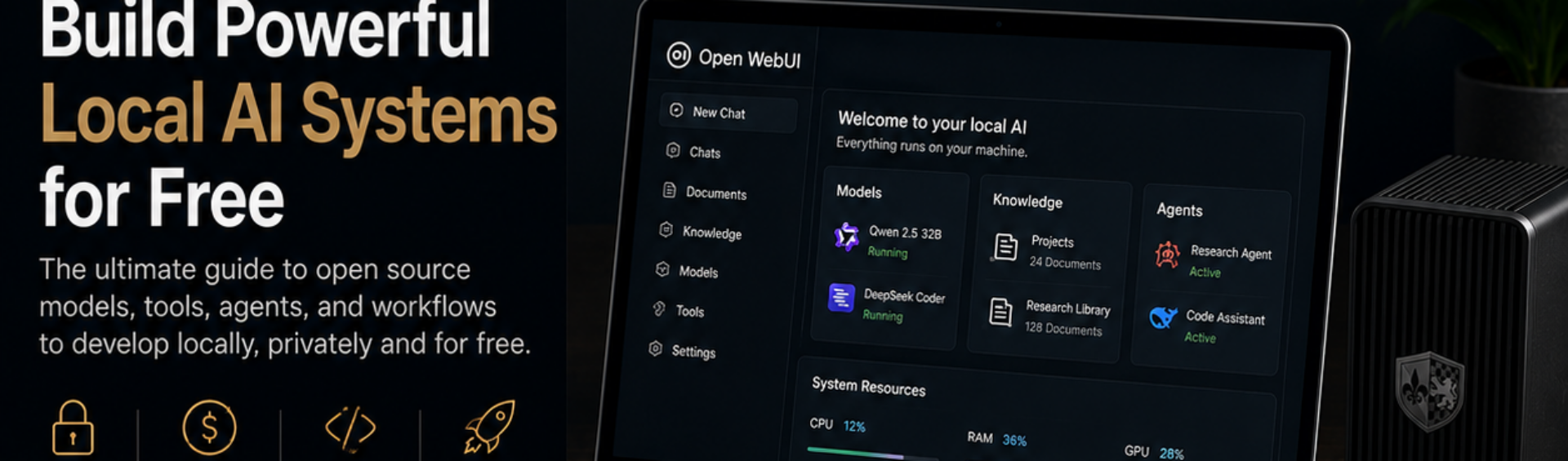
Artificial intelligence is no longer reserved for technology giants with massive budgets and data centres. A growing ecosystem of open-source AI tools is enabling developers, researchers, designers, creators, and businesses to build powerful AI systems locally, often at little or no cost. What once required enterprise infrastructure can now run on a desktop workstation, a laptop, or even a home server. The open-source AI movement is changing who controls artificial intelligence. More importantly, it is changing who can build with it. Why Open Source AI Matters Most commercial AI platforms operate as closed systems. Users interact through subscriptions, APIs, usage limits, and provider-controlled environments. Open-source AI offers a different approach. Benefits include: Full ownership of your data Greater privacy Complete customisation No vendor lock-in Lower long-term costs Community-driven innovation Local deployment options Instead of renting intelligence, you can build and control it yourself. Building a Local AI Stack Modern open-source AI ecosystems are made up of several layers. Models The intelligence layer. Interfaces How users interact with the models. Workflows Automation systems that connect tools together. Knowledge Systems Document retrieval, memory, and research capabilities. Agents Autonomous systems capable of completing tasks. Combined, these components form a complete AI operating environment. […]
Read More
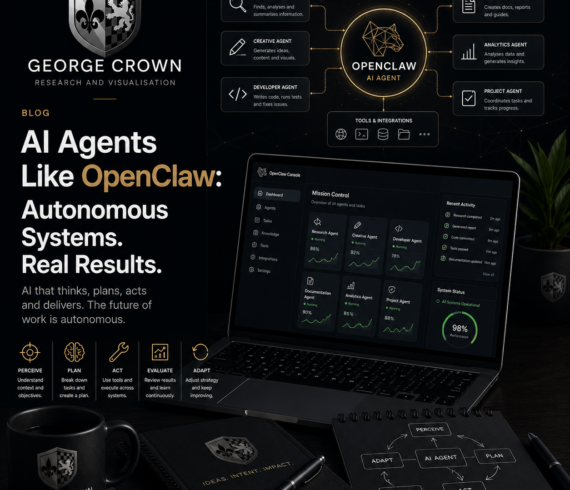
Artificial intelligence is evolving rapidly. The conversation is no longer focused solely on chatbots, image generation, or code completion. The next frontier is AI agents. These systems are designed not just to answer questions, but to take action. They can observe environments, make decisions, use tools, complete tasks, coordinate workflows, and interact with digital systems on behalf of users. Projects such as OpenClaw and a growing ecosystem of autonomous agent frameworks are demonstrating what happens when AI moves beyond conversation and begins operating within the real world. The result is a fundamental shift in how we think about software. What Is an AI Agent? A traditional AI model responds to prompts. An AI agent pursues objectives. Rather than generating a single answer, an agent can: Analyse a task Create a plan Execute actions Evaluate results Adapt strategy Continue working until a goal is achieved The difference may seem subtle, but it changes everything. A chatbot answers questions. An agent solves problems. From Assistants to Operators Most people interact with AI as an assistant. You ask a question. The system responds. The interaction ends. AI agents extend the process. Instead of asking: “How do I build a website?” You might ask: […]
Read More
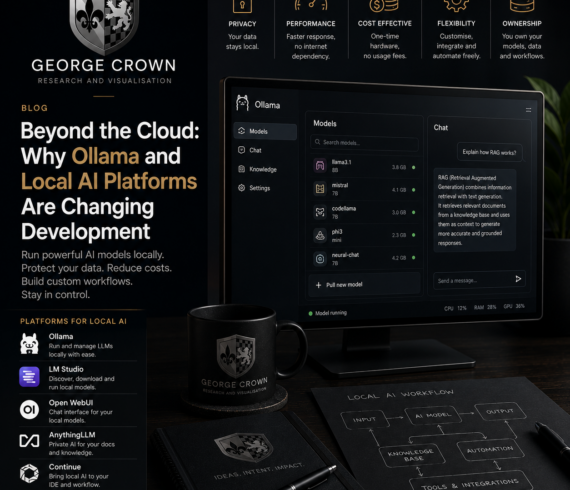
Artificial intelligence has become one of the most powerful tools available to developers, researchers, designers, and creators. Most AI services today operate through the cloud. You send a prompt. A remote server processes the request. A response returns seconds later. The experience is convenient, but it comes with limitations. Privacy concerns, subscription costs, internet dependency, API restrictions, and limited customisation have led many professionals to explore a different approach. Running AI locally. Platforms such as Ollama and other self-hosted AI ecosystems are making it easier than ever to build powerful AI-powered workflows directly on personal hardware. The result is a growing movement toward local-first artificial intelligence. What Is Ollama? Ollama is a lightweight platform that allows users to download, run, and manage large language models directly on their own machines. Instead of connecting to a cloud service, models run locally on: Windows macOS Linux Workstations Home servers Development machines The experience is surprisingly simple. A single command can download and launch a powerful language model capable of coding, writing, analysis, reasoning, and problem solving. For developers, Ollama has become one of the most accessible entry points into local AI. Why Developers Are Moving Local Cloud-based AI platforms remain incredibly useful, […]
Read More
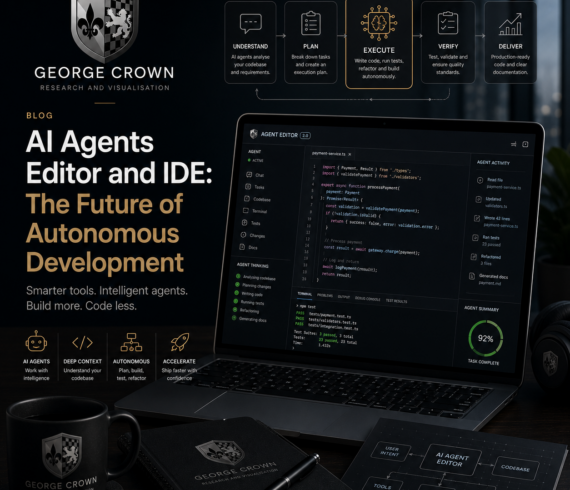
Software development is entering a new era. For decades, developers have interacted with computers through code editors, terminals, and increasingly sophisticated IDEs. While tools became more powerful, the relationship remained largely unchanged. Humans wrote instructions. Computers executed them. Artificial intelligence is fundamentally altering that dynamic. A new generation of AI-powered development environments is emerging, transforming editors into intelligent collaborators capable of understanding goals, planning tasks, modifying codebases, conducting research, and executing complex workflows with minimal supervision. The age of the AI Agent Editor has arrived. Beyond Autocomplete The first wave of AI development tools focused primarily on assistance. They completed lines of code. Suggested functions. Generated snippets. Answered technical questions. While useful, these systems remained reactive. The developer still performed the majority of planning, navigation, implementation, testing, and decision-making. Agent-based systems represent a significant leap forward. Rather than helping write code, they help build solutions. Instead of asking: “How do I create this feature?” Developers increasingly ask: “Build this feature and explain your decisions.” The difference is profound. What Is an AI Agent Editor? An AI Agent Editor combines traditional development tools with autonomous AI capabilities. The editor can: Understand project objectives Analyse existing codebases Generate implementation plans Create and […]
Read More
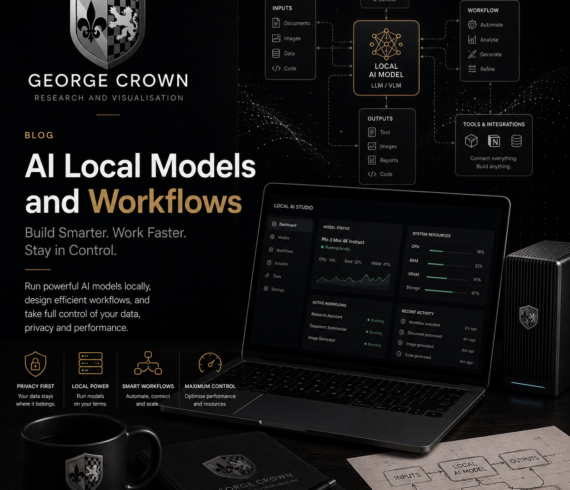
The AI revolution has largely been powered by cloud services. Every prompt, image, document, and conversation is typically sent to a remote server where powerful models process requests before returning a result. For many users, this works perfectly. For others, it raises important questions. What happens to sensitive data? What if internet access is unavailable? What if performance, privacy, or customisation are critical? Increasingly, organisations, researchers, developers, and creative professionals are turning to local AI models and automated workflows as an alternative. The goal is simple: Maintain the power of modern artificial intelligence while keeping complete control over the environment in which it operates. What Are Local AI Models? A local AI model runs directly on your own hardware rather than relying on a third-party cloud provider. These models can operate on: Desktop workstations Laptops Home servers Enterprise infrastructure Dedicated AI hardware Popular examples include open-weight large language models, vision models, coding assistants, speech recognition systems, and image generation tools. Instead of sending information to a remote service, processing occurs entirely within your own environment. The result is greater control over performance, security, privacy, and integration. Why Local AI Matters Cloud AI is incredibly powerful, but it introduces dependencies. Your […]
Read More
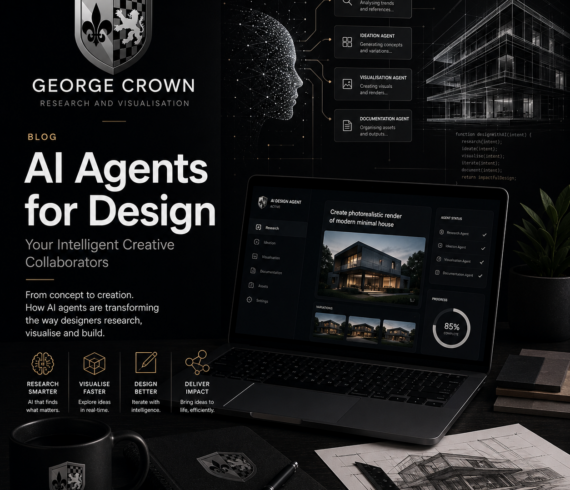
Artificial intelligence is rapidly evolving from a tool into something far more capable. For years, designers have used software to draw, model, render, document, and present ideas. The software itself remained passive. It waited for instructions. Today, a new generation of AI systems is changing that relationship. AI agents are emerging as active collaborators capable of researching information, generating concepts, refining designs, creating visualisations, and even managing project workflows. Rather than replacing designers, these agents are becoming powerful extensions of the creative process. What Are AI Agents? Unlike traditional AI tools that perform a single task, AI agents can operate with objectives. They can: Research information Analyse requirements Generate ideas Create visual assets Evaluate solutions Coordinate workflows Produce documentation Iterate based on feedback An AI agent acts less like software and more like a specialist assistant working toward a defined goal. Imagine assigning a brief to a digital team member that can continuously gather information, develop options, and present recommendations while you focus on higher-level decisions. That is the promise of AI agents. From Tools to Teams Design workflows have traditionally required multiple disciplines working together. Researchers gather information. Designers explore concepts. Visualisers create presentations. Technical specialists develop documentation. Project […]
Read More